Experimental Model
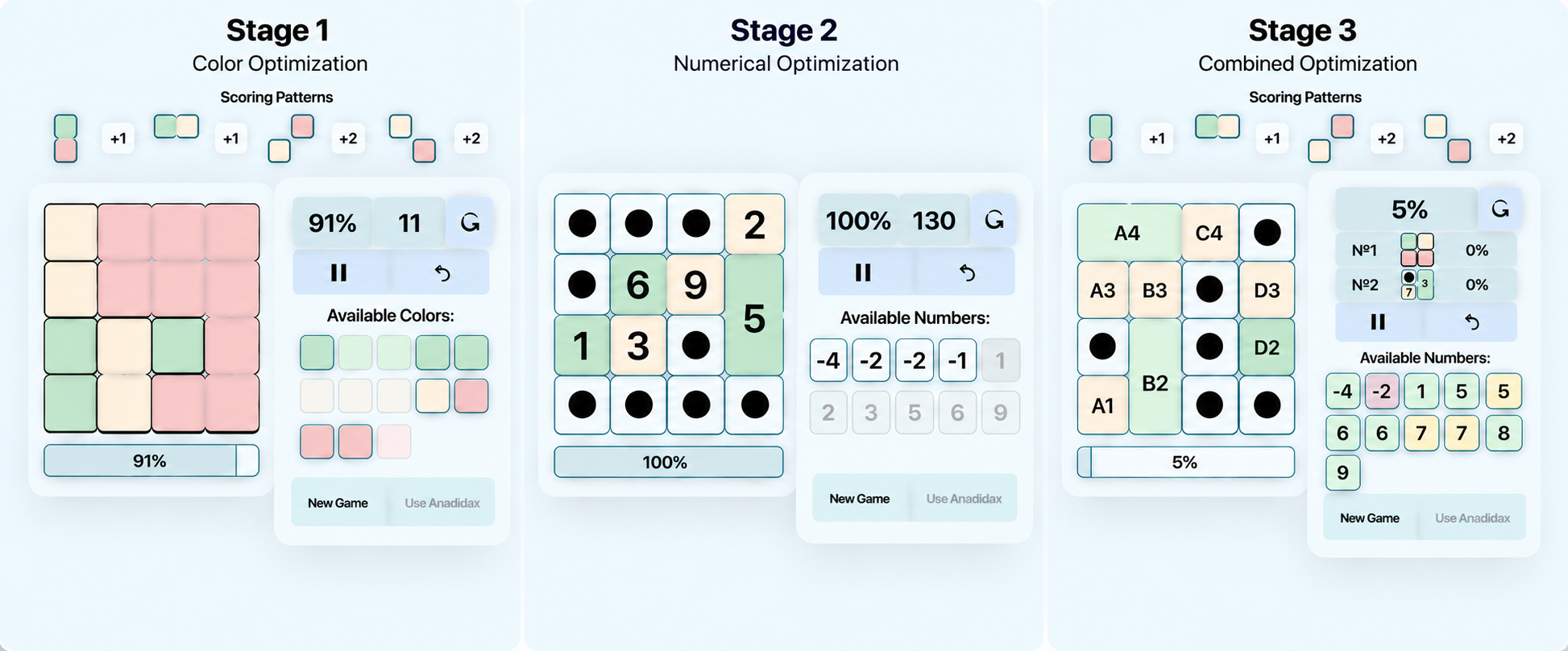
Based on the theoretical principles described earlier, the cognitive experiment consists of three sequential optimization tasks. The first two stages assess two types of optimization separately, while the third combines them into a single task.
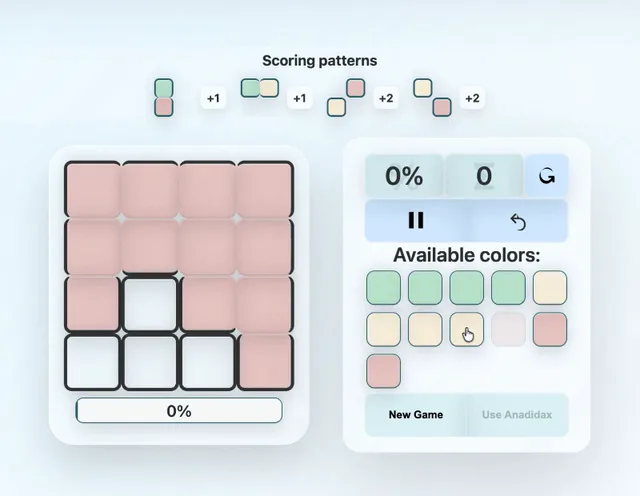
Stage 1 — Color Optimization
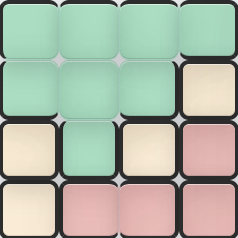
The participant is presented with a field consisting of clusters and a pool of elements in three colors: red, yellow, and green. Specific color combinations produce points.
The task is to distribute the colors among the clusters in such a way as to obtain the maximum possible Color Score.
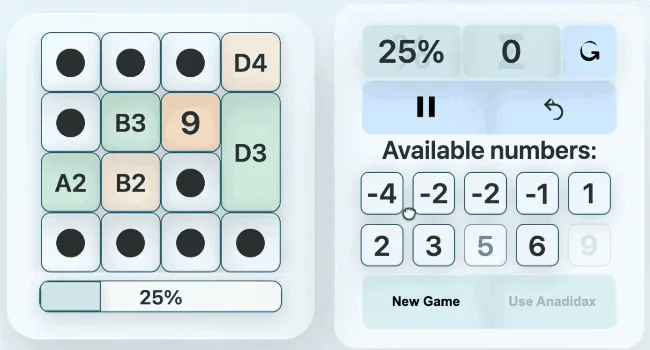
Stage 2 — Numerical Optimization
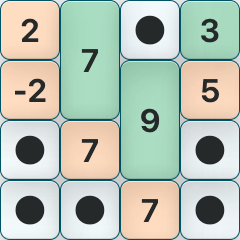
The participant is presented with a field of cells and a pool of numbers. The cells have different functions: some contain numerical values, while others act as coefficients. The final score is determined by a mathematical formula specified for the field.
The task is to arrange the numbers in such a way as to obtain the maximum possible Number Score.
Stage 3 — Combined Optimization
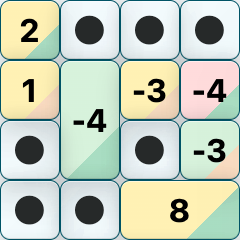
In the third stage, the two previous tasks are combined. The participant is again presented with a field of cells and a pool of numbers, but now each number also has one of the three colors — red, yellow, or green.
Each placement therefore affects two independent measures:
Color Score ⇔ Number Score
The task is to find a configuration that produces the highest possible result for both criteria simultaneously.
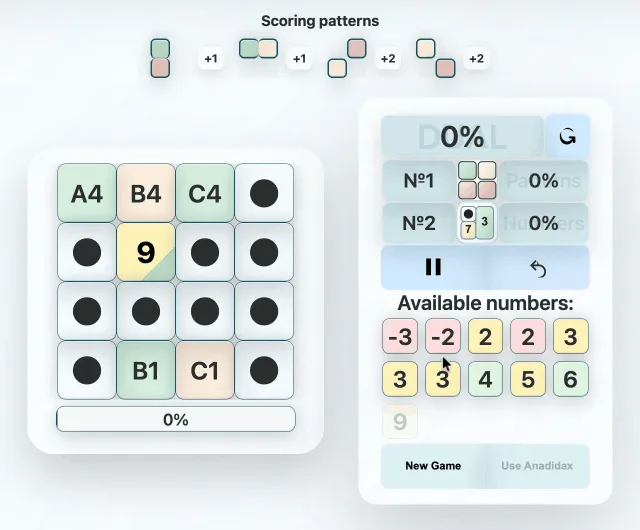
Thus, the first two stages show how a person solves each optimization task separately, while the third makes it possible to examine how the decision-making strategy changes when two optimization criteria must be considered simultaneously and cognitive resources must be distributed between them.